FAQ
Pool maintenance
Organic or Chemical: Which Water Treatment is Right for My Pool?
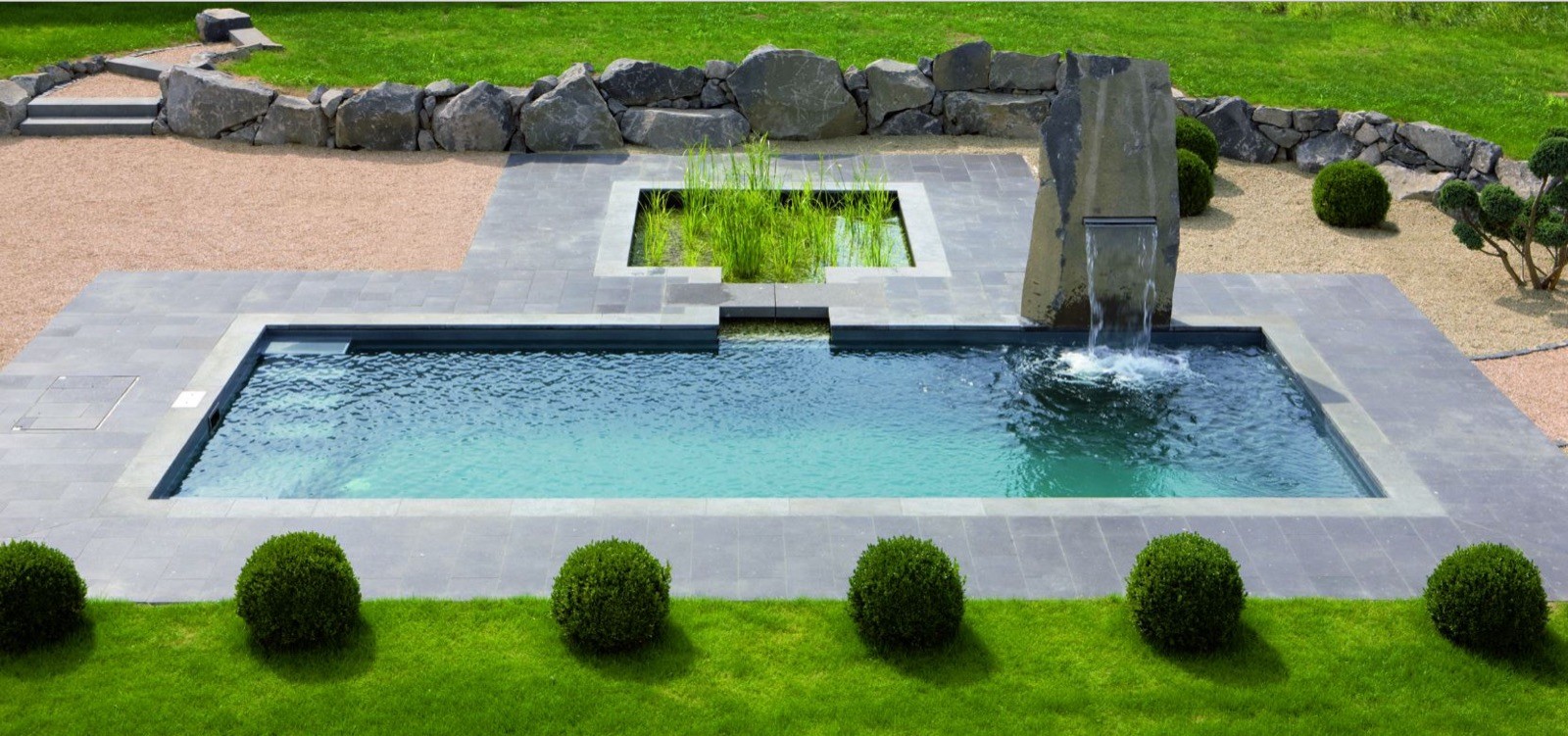
Whether you treat your pool water biologically or chemically is primarily a matter of taste: Do you want a natural pool that is purified by microorganisms, similar to a bathing lake, or do you want disinfected water similar to a swimming pool? Both types of water treatment have their advantages and are possible in prefabricated swimming pools: With biological water treatment, the actual swimming pool is preceded by a planted filter zone, which can be located directly at the pool or a few meters away. The natural pool is therefore divided into a swimming area and a cleaning area – about 90 percent of the area is available for swimming, while the filter zone takes up about 10 percent of the area. It consists of gravel, granulate, and aquatic plants. With the help of a pump, pool water continuously flows through the filter zone. The nutrients in the pool water are stored in the filter substrate and broken down by the biomass. Microorganisms reliably clean the water in a natural way and keep it permanently in balance. Water in natural pools is of drinking water quality, particularly soft, and pleasant on the skin. Depending on the design, even a heated pool can be combined with biofiltration. In order for the microorganisms to adapt to the temperatures, slow heating is recommended. In chemical water treatment, the addition of inorganic chlorine is the most common form because it kills germs quickly, reliably, and cost-effectively. The smell of chlorine, skin, and eye irritation that you might know from the outdoor pools of your childhood occur when there is too little free and active chlorine in the swimming pool water. In this case, for example, chlorine-nitrogen compounds form, causing the unpleasant side effects. If the level of free and active chlorine is around 0.3 mg per liter, these side effects are not to be feared. In addition, sufficient addition of fresh water and a perfectly functioning filtration are important. Then, chlorine is the first choice as a disinfectant.
An alternative is water treatment using so-called active oxygen. Here, hydrogen peroxide (H2O2) is added to the water. In water, the peroxide dissolves again into water (H2O) and divalent oxygen (O2). It has a good disinfecting effect. No side effects can occur, even if the dosage is occasionally insufficient. Overall, however, the disinfecting effect is significantly weaker compared to chlorine.
Ozone can also be used for water treatment. However, since the process engineering for this is very complex, the use of ozone in practice is reserved for public swimming pools. Nevertheless, there are various systems on the market that carry the word ozone in their type designation. As a rule, these are electrolyses of table salt.
In addition to the methods mentioned above, saltwater electrolysis is frequently found as a so-called disinfection or water treatment method. Here, table salt (NaCl) is added to the pool water and broken down via an electrolysis cell into sodium hydroxide and chlorine. Therefore, this is nothing other than disinfection with chlorine. The only difference is that the chlorine is produced on-site in the pool water.
In general, the more thoroughly you shower before bathing and remove dirt, cosmetics, and sunscreen, the cleaner the pool water remains.

Non-binding. Personal. Project-oriented.